GameBro Portable Gaming Device (Gameboy)
This model was an assignment for a 3D modeling course at the University of Central Florida. The original image was an AI-generated image of a Gameboy that we used to create the overall shape of the model in Maya before creating a high-poly mesh in ZBrush and texturing. The assignment's criteria involved using Booleans wherever possible and box-modeling techniques to create the shape of the mesh. We were allowed to freely texture the finished model in Substance 3D Painter however we liked, following the PBR-workflow. I added a camera on top, similar to the Gameboy Camera.

The front and back sides of the model. Rendered in Unreal Engine 5.

I added small text imprints throughout the model. These dials I imagined would be used to control the X and Y axes, much like an 'Etch A Sketch.'
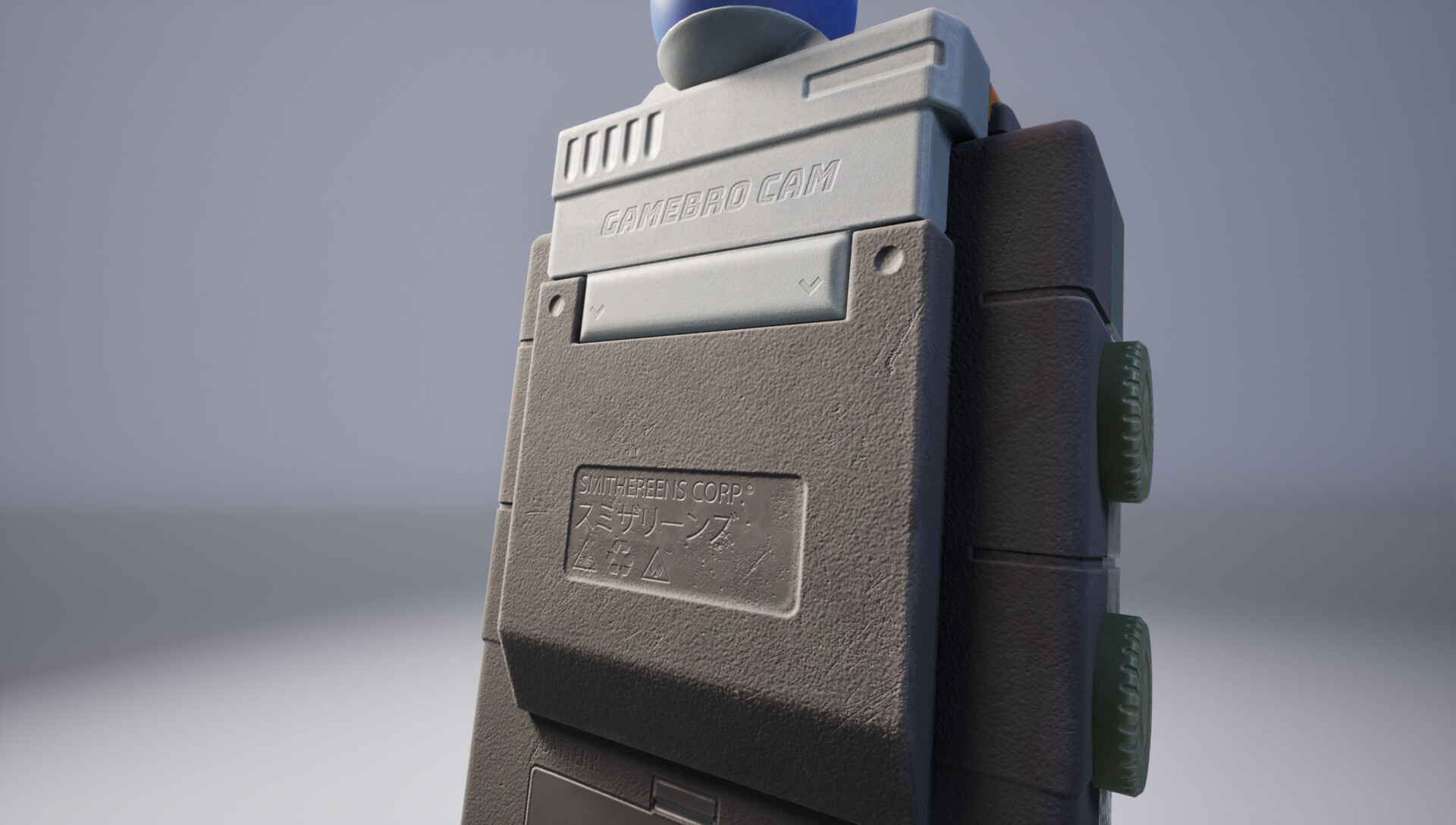
I added my handle in the backside imprint, along with Japanese Katakana that would read as "Smithereens." Luckily this GameBro is recyclable.

I imagined the top connector of the model to have a metal connection point.

A closer screenshot of the front panel details. There are two options at the bottom for "turbo" and "overdrive." I imagined they could be used in someway with gameplay.

A different lighting angle. I really like this one.

A screenshot of the high poly mesh frontside in ZBrush.

The lower poly model after retopology, sitting at 11.7k triangles. I was able to preserve most of the high poly mesh details after some adjustments to the model/UVs and creating a cage to bake with.

A screenshot of the UVs, using UDIMs, Virtual Texture Support, and two materials in Unreal Engine. I opted to split the UVs into 4 tiles to add as much detail as possible while still being able to render it as a game-ready item in Unreal Engine.

A progress shot of the Boolean method and box-modeling used to start shaping out the model.